Winters in Virginia - Warmer, colder, or weirder?
Written by Dr. Luis E. Ortiz
If you ask many Virginians about the winter of 2025-2026, they’ll probably shiver and immediately recall the massive January winter storm. It was a staggering event (the National Weather Service meteorologists declared it a "once-in-a-decade" storm) bringing a volatile mix of widespread snowfall, sleet, freezing rain, and dangerous single-digit temperatures. The storm triggered a statewide state of emergency, stranded subdivisions for days behind uncleared roads, and pushed our power grid and water infrastructure to the absolute brink. Roads were iced over, daycares and schools were closed, and few of us got any work done.
When you live through an extreme blast of cold like that, it feels like winter is as fierce as ever. But what does the actual climate data say? Are our winters getting warmer, colder, or just plain weirder? Using 75 years of historical data from the NOAA nClimGrid-daily dataset, we analyzed the daily temperature records across all six of Virginia's climate divisions to put this recent winter into climatological context. Here is what the data reveals.
It doesn’t feel like it but yes, winters are warming
First, let’s address the elephant in the room: Virginia’s winters are undeniably getting warmer. In fact, as the Virginia Climate Assessment found, we’re losing cold days faster than we’re gaining hot days in the summer.
When we look at the average temperature from December through February over the last 75 years, every single climate division in the Commonwealth shows a statistically significant warming trend (Figure 1). If we examine the "number of freezing days" (days where the minimum temperature drops to 32°F or below), the trend is strikingly clear. Across almost the entire state of Virginia—from the Western Mountains to the Tidewater—the number of freezing days we experience each winter is steadily dropping (Figure 2).
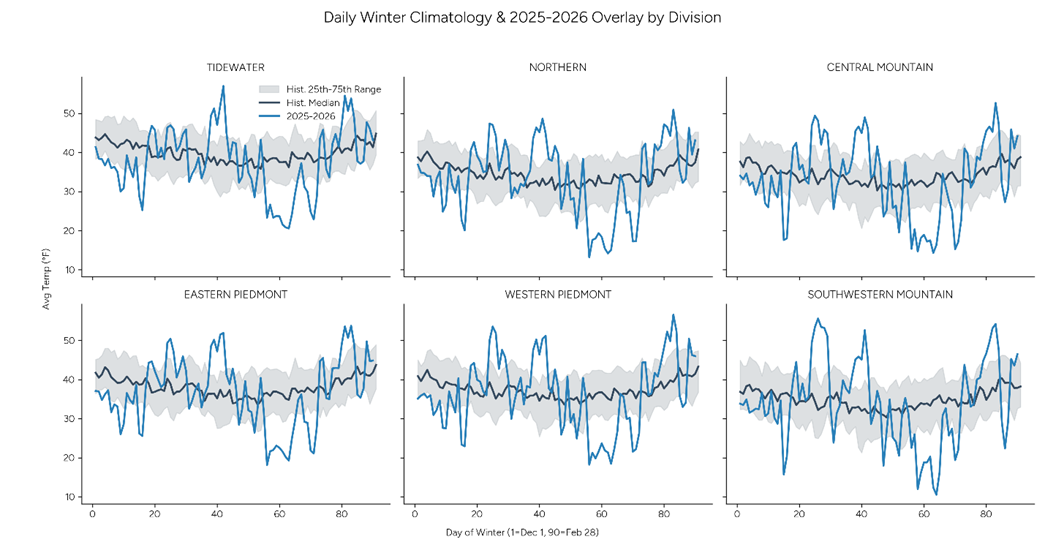
Figure 1: Comparing Winter 2025-2026 to historical records show both cold and warm extremes across all of Virginia’s Climate Divisions.
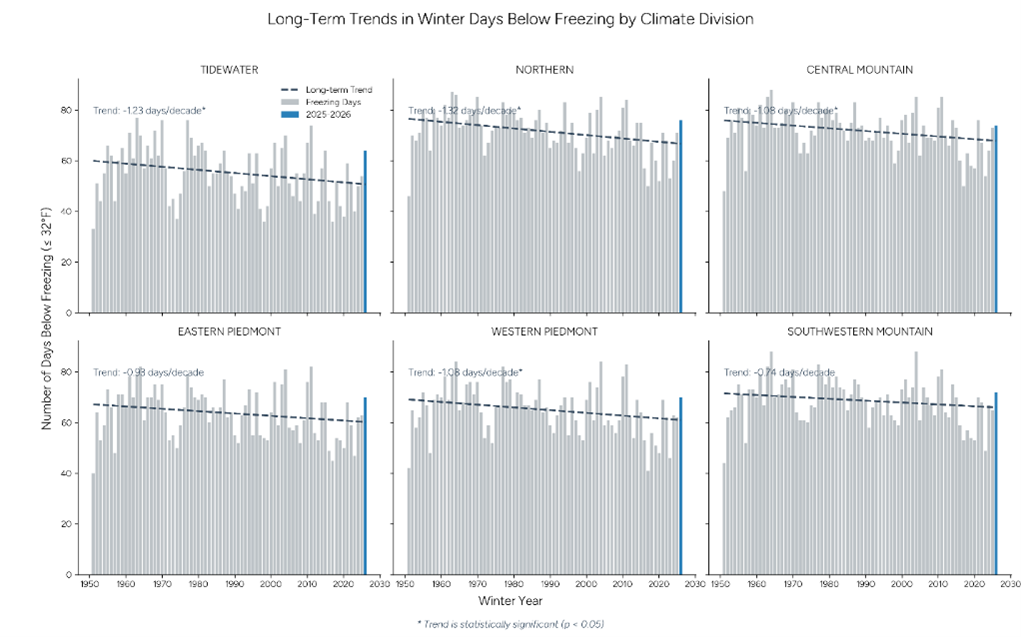
Figure 2: Trends in days below freezing across Virginia’s Climate Divisions.
Take the Tidewater region, for example. The historic downward slope (denoted by the dashed black line in Figure 2) means that coastal Virginians are experiencing notably fewer freezing mornings today than they did in the mid-20th century.
Was the 2025-2026 winter abnormally cold?
Given the ferocity of the January storm, you might expect this past winter to rank as one of the coldest on record. Surprisingly, it wasn’t. When we plotted the daily winter climatology (the shaded gray bands in Figure 1 representing the historical "normal" range of temperatures for any given winter day) and overlaid the daily averages for 2025-2026, the recent winter spent almost all of its time well within standard, expected bounds. Overall, the 2025-2026 winter wasn’t just cooler than the 75-year historical average—statistically speaking; it was incredibly "normal", falling well within the standard deviation of typical Virginia winters. So why did it feel so cold?
Winter hasn’t quite lost its bite
This brings us to the most fascinating (and dangerous) part of our changing climate. We looked at the extreme cold temperatures during winter (Figure 3).
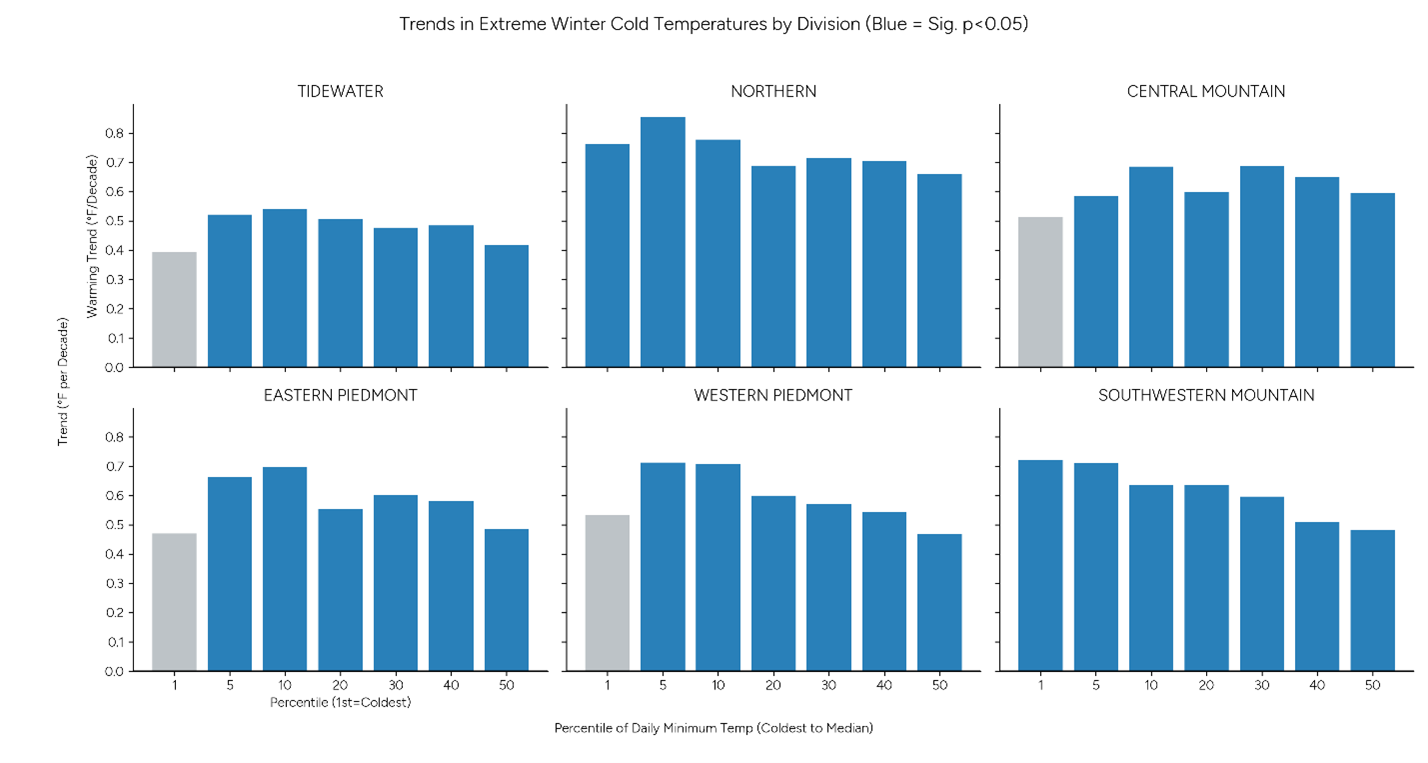
Figure 3: Magnitude of the trends in winter cold temperatures by percentile.
The data shows that while our "normal" winter days (the 40th and 50th percentiles) are warming rapidly, the absolute coldest days of the year (the 1st and 5th percentiles) are not warming nearly as fast. In many divisions, the warming trend for those deepest, darkest winter freeze events is muted and not even statistically significant. The one exception to this trend is the Southwestern Mountain region (seen in Figure 4), which is losing nearly 0.7°F from its coldest 1% of days every decade.
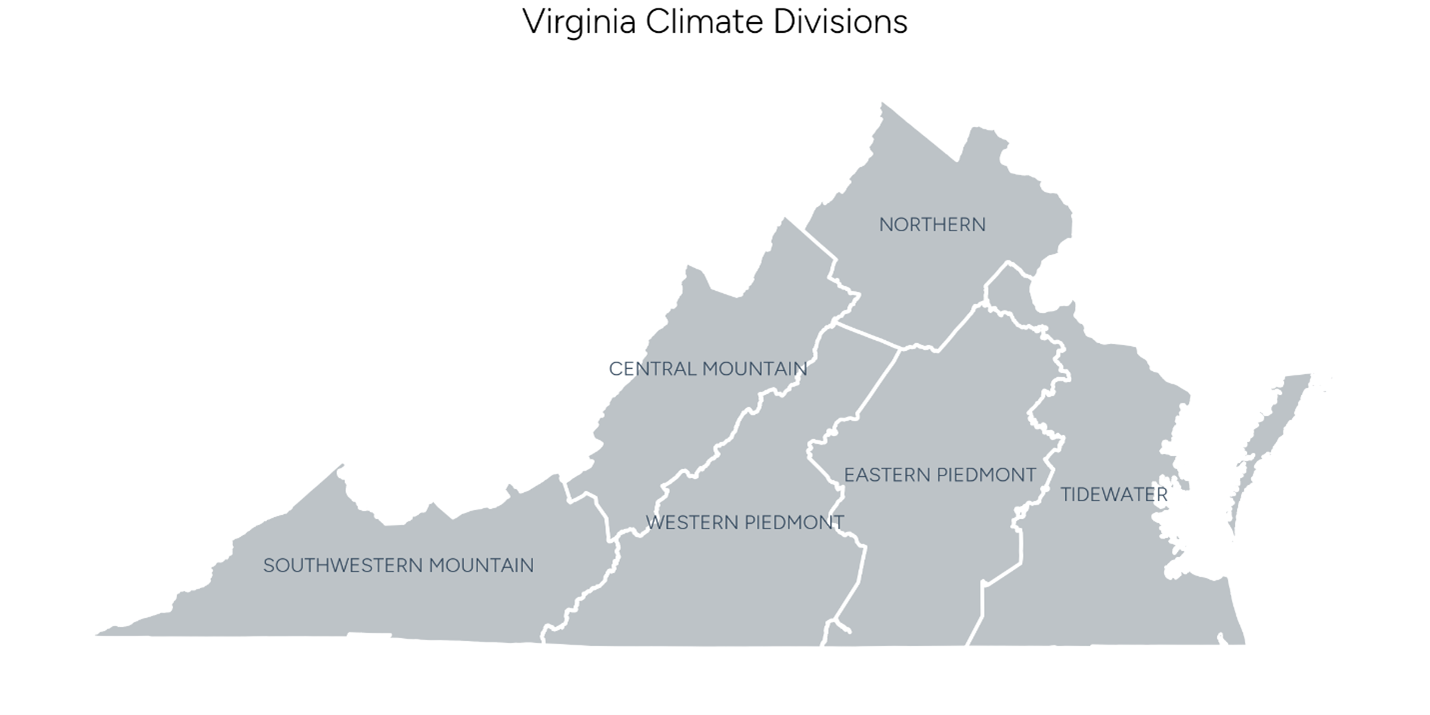
Figure 4: The NOAA Climate Divisions of Virginia.
This means that while our average winter is getting milder and producing fewer freezing days, Virginia can and will still experience intense extreme cold snaps. They may just happen less frequently or irregularly than they used to. This is exactly what we witnessed during the January 2026 storm. The overall winter was mild, but the extremes haven't vanished. When that severe cold front did inevitably break through, it wreaked havoc. Because we are experiencing fewer freezing days overall, our infrastructure is often caught off guard by these sudden regressions to extreme cold.
So don’t throw out your bag of dog-safe ice melt just yet. Virginia's winters are undoubtedly getting warmer on average, but as 2025-2026 proved, cold extremes are still bound to happen.
Author

Dr. Luis E. Ortiz
Dr. Ortiz is a co-PI for the Virginia Climate Center and Assistant Professor in the Department of Atmospheric, Oceanic, and Earth Sciences at George Mason University